
Everything you need to know about Addu Atoll
Addu is not only a place to stay. It is a living atoll with deep history, connected islands, local food, schools, communities, wetlands, dive sites, and people who still shape the Maldives from the far south.
A real island city spread across an atoll
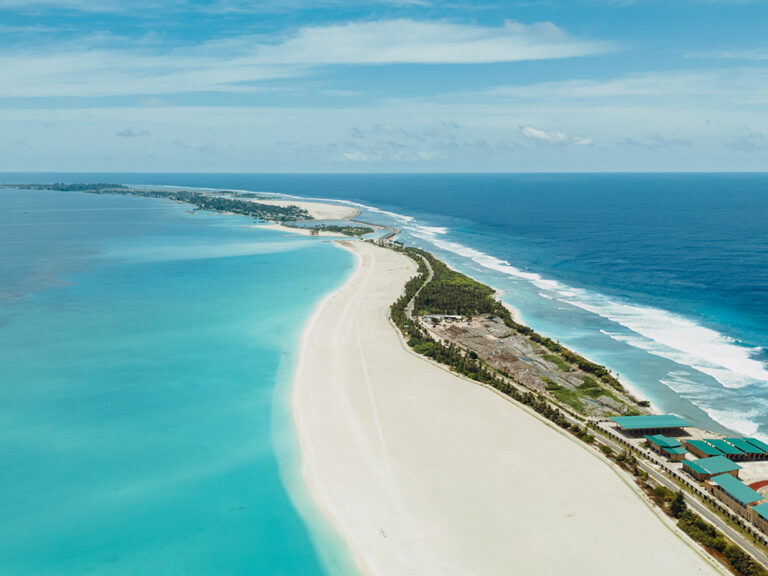
Addu Atoll, also known as Seenu Atoll, sits south of the equator. Its western islands are connected by road, while Meedhoo and Hulhudhoo sit on the eastern side with their own local rhythm.
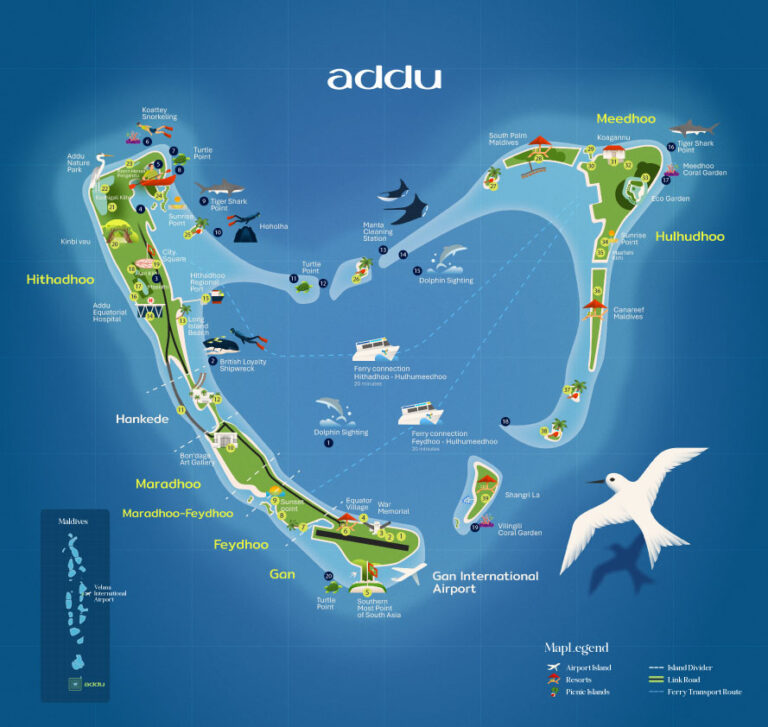
- Connected western islands: Hithadhoo, Maradhoo, Maradhoo-Feydhoo, Feydhoo, and Gan are linked by causeways and roads.
- Eastern local islands: Hulhudhoo and Meedhoo give visitors a quieter local-island setting with heritage, beaches, and community life.
- Lagoon and channels: Addu has a calm natural anchorage and several channels leading into the lagoon.
- Land and life: The atoll has more usable land than many Maldivian atolls, supporting schools, sports, businesses, farming, ports, and public services.
From early island life to Islam, Gan, and the modern city
Addu’s story includes early settlement, the spread of Islam through Meedhoo, Koagannu’s heritage value, seafaring trade, British military history, and later transformation into a connected city.

Before airports, paved causeways, and tourism, Addu life was built around fishing, farming, boat building, weaving, toddy work, family networks, island mosques, and ocean trade.
Meedhoo is closely linked with the early Islamic history of the Maldives and is often described as one of the first islands in the country to embrace Islam.
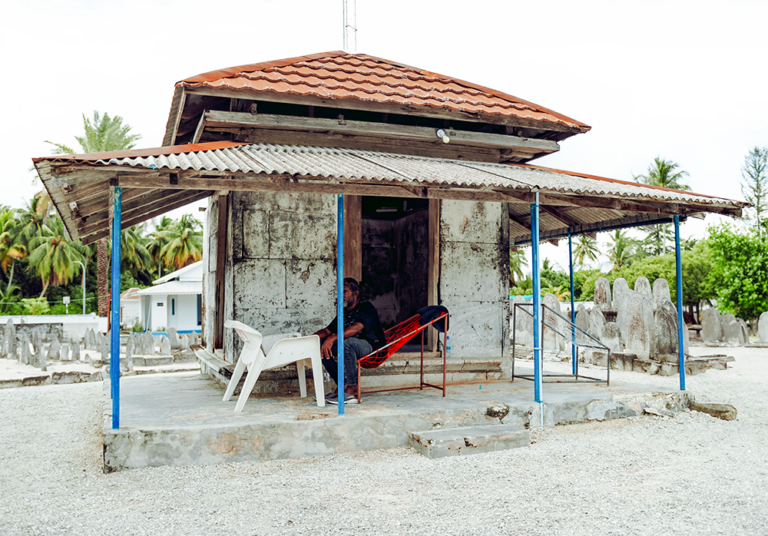
Koagannu in Meedhoo is one of the Maldives’ oldest religious heritage sites, known for coral-stone tombstones, mosque heritage, and its place on the UNESCO World Heritage Tentative List.
Adduans were known for trade vessels, navigation, fishing, farming, weaving, and toddy-related work that connected the south with Sri Lanka, India, and beyond.
Gan became a British military base during and after World War II. The legacy remains in Gan International Airport, Equator Village, old roads, and still-standing wartime-era buildings.
After the British era, Addu gradually changed from a more isolated southern atoll into a road-connected city with schools, services, tourism, aviation, port activity, and wider links to the Maldives economy.
Local life is the main attraction
Visitors often come for beaches and diving, but they remember the conversations, neighbourhood life, family hospitality, language, food, and community pride.
Addu Bas
Addu has its own dialect, known locally as Addu Bas. It gives the atoll a distinct voice within the Maldives and is part of what makes conversations here memorable.
Education matters
Schools, sports clubs, youth groups, and families play a major role in local life. Education and community activity are central to how the atoll develops.
Community work
Local associations and NGOs support environment, heritage, sports, health, youth, and clean-island work. Guests can help by respecting local spaces and joining guided activities responsibly.
Addu is shaped by fishing, farming, tourism, and everyday service
The local economy includes fisheries, tourism, Gan International Airport, Hithadhoo Regional Port, public institutions, small farms, shops, cafes, transport, and island services.
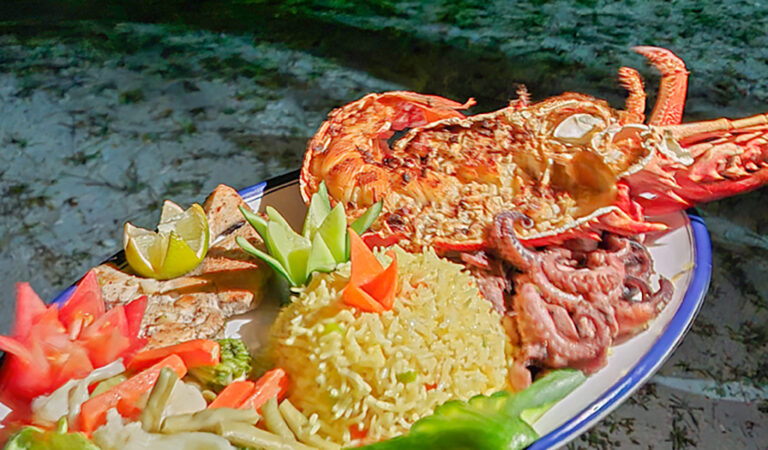
Fresh fish, coconut, spice, and snacks
Addu food is one of the easiest ways to feel the culture: tuna dishes, coconut-based curries, sweet and savoury snacks, king coconut stops, and local spice blends.

Island cafes and evening life
Cafes and small restaurants are part of the social rhythm. They are good places to try local flavours, meet hosts, and plan the next ride, swim, dive, or island visit.
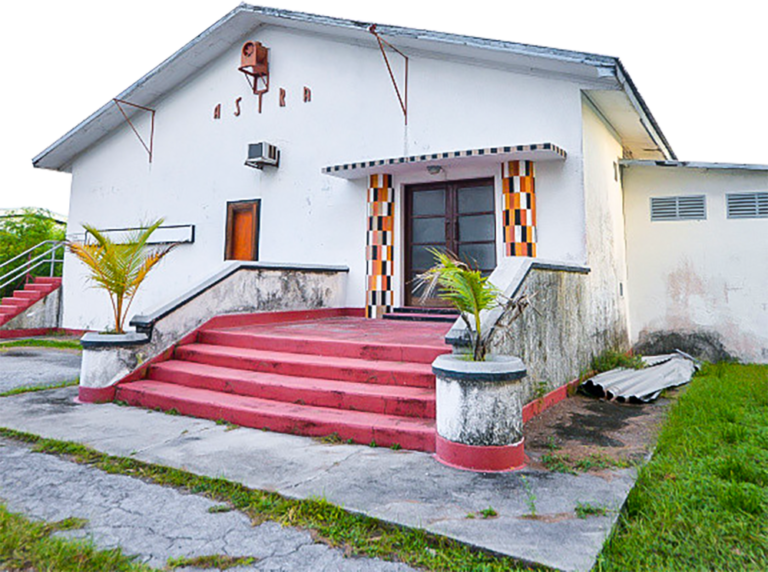
Airport, port, tourism, and services
Addu’s work life is broader than tourism alone, with fishing, farming, airport operations, port activity, public services, retail, transport, and hospitality all connected.
Easy to reach, easier to explore once you arrive
Gan International Airport connects Addu to Male and, at times, direct international routes. Once on the ground, road-linked islands make Addu one of the most practical places to explore in the Maldives.
Gan International Airport
Most visitors arrive through Gan after a domestic connection from Male or selected direct routes when available.
Linked islands
The western side is practical for cars, vans, bicycles, and guided road-based sightseeing.
Lagoon and channels
Boat trips connect beaches, snorkelling, fishing, diving, sandbanks, and resort-style day experiences.
Local support helps
Addu is best enjoyed with a plan that matches transport, island choice, food, activity timing, and weather.
History, wetlands, beaches, roads, reefs, and local homes
Addu has a rare mix: protected wetlands, old RAF-era sites, Koagannu, broad roads, quiet beaches, local neighbourhoods, resort islands, and dive sites close enough to plan around.
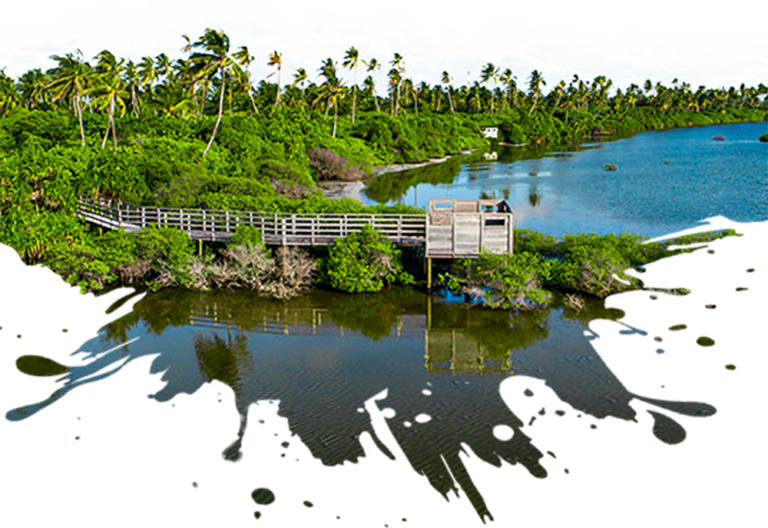
Addu Nature Park
Wetlands, mangroves, bird life, canoeing, walkways, and quieter nature routes in Hithadhoo.
Koagannu, Meedhoo
A major historic cemetery and religious heritage site with coral stone tombstones, early Islamic importance, and UNESCO World Heritage Tentative List recognition.
Island neighbourhoods
Markets, cafes, mosques, schools, beaches, family homes, sports grounds, and the slower daily life of the atoll.
Addu is one of the best bases for active Maldives travel
Guests can combine cycling, island tours, food stops, fishing, snorkelling, kayaking, cultural visits, diving, resort day trips, and community-led experiences.
Mantas, sharks, turtles, reefs, and wrecks
Addu is known for year-round diving, resident manta encounters, channels, healthy reefs, turtles, reef sharks, and the British Loyalty wreck.
Ride, paddle, snorkel, fish
Road-linked islands make cycling and guided drives easy, while the lagoon creates space for canoeing, snorkelling, fishing, and boat-based exploration.
Food, families, heritage, and local hosting
Addu is a strong place for travellers who want to meet local hosts, try island food, visit heritage sites, and understand the Maldives beyond resort brochures.
Travel here should support the place, not only pass through it
Addu has sensitive reefs, wetlands, beaches, homes, schools, mosques, and community spaces. A good visitor experience respects each of them.
Leave them cleaner
Carry waste back, avoid single-use plastic where possible, and keep picnic spots tidy.
Look, do not touch
Use reef-safe habits, avoid standing on coral, and follow dive or snorkel guide instructions.
Respect local spaces
Dress and behave appropriately around homes, schools, mosques, cemeteries, and neighbourhoods.
Support local effort
Choose guided experiences that involve local people and support conservation, heritage, youth, and clean-up initiatives.
Want to understand Addu before planning your stay?
Tell us your travel dates, interests, and comfort level. We can match the right island base, activities, food stops, guides, and property options.