
What to try, how to eat like a local, and how to plan food experiences that feel relaxed, respectful, and memorable.
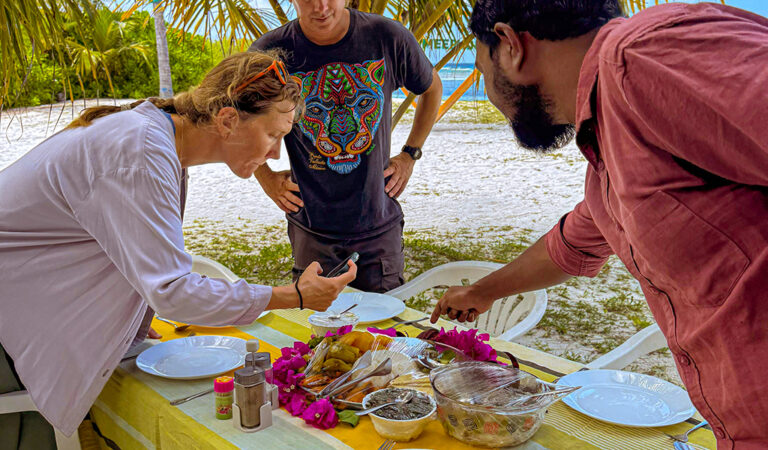
Food is one of the easiest ways to understand Addu Atoll. A meal here can be simple, filling, and deeply connected to island life: tuna, coconut, lime, chili, reef fish, roshi, rice, local greens, tropical fruits, black tea, and warm island hospitality. The best food experiences are not only about ordering dishes. They are about timing, setting, conversation, and understanding how local families actually eat.
What Local Food in Addu Is Like
Maldivian food is shaped by the sea, the island kitchen, and everyday family life. In Addu Atoll, tuna is central, coconut appears in many forms, and meals often balance heat, freshness, salt, acidity, and slow-cooked richness. Breakfast is high in protein, lunch can be full of island vegetables and grilled fish, and dinner has its own older traditions that feel very different from many European or Western dinner habits.
Breakfast in Addu Atoll
Breakfast is special in Addu Atoll because it is usually hearty, high in protein, and built around tuna, coconut, and flatbread. In many places in the Maldives, the basic breakfast dishes are similar, but Addu has its own local words, habits, and small flavor differences that make the experience feel more rooted in the south.
Traditional Lunch in Addu Atoll
Lunch can be many things in Addu Atoll, but one of the best traditional experiences is a full local lunch built from grilled fish, tuna-based sides, island vegetables, rice, roshi, and pickles. It is filling, balanced, and full of clean energy for travelers who want to keep exploring after the meal.
- Freshly grilled wahoo: lean protein with Omega-3, often served simply so the fish stays the focus.
- Rihaakuru: concentrated tuna protein with a salty, deep flavor.
- Tuna soup: a light broth that feels hydrating and clean.
- Sweet potato: fiber and slow energy.
- Butternut squash: natural carbs, color, and vitamin C.
- Moringa leaves: one of the strongest island superfoods, packed with vitamins and minerals.
- Roshi and rice: simple carbs for steady energy.
- Bilimbi pickle: a sharp hit of natural vitamin C and acidity.
Dinner and Older Food Traditions
Dinner in Addu Atoll can also be heavy and deeply traditional. In older days, one memorable dinner was rice mixed with banana and fani hakuru, served with small pieces of chili-fried tuna. It sounds simple, but it shows how island families used what they had: rice, coconut palms, tuna, fruit, and heat.
Fani hakuru is a rich golden Maldivian syrup made by boiling down coconut toddy, locally known as ruvaa, which is the sweet sap tapped from coconut palm blossoms. Think of it as a Maldivian cousin of maple syrup or honey, but with a deeper coconut-caramel flavor. Paired with rice, banana, and spicy tuna, it creates a dinner flavor that is sweet, salty, rich, and very local.
Food Experiences Worth Planning
1. Traditional breakfast
Start the day with folhi, mas huni, kulhi mas, pumpkin mix, or rihaakuru. This is one of the easiest ways to taste daily Maldivian food without making the experience too formal.
2. Local lunch experience
A hosted lunch can include grilled fish, tuna soup, rihaakuru, island vegetables, roshi, rice, and pickles. This is one of the best ways to understand how Addu food balances protein, energy, acidity, and freshness.
3. Beachside barbecue or seafood meal
Seafood is often the meal visitors remember most. Ask what is fresh, how it is prepared, and whether the kitchen can adjust spice levels. If you are traveling with children or guests who prefer mild food, mention that early.
4. Food and culture walk
A food walk can combine cafes, neighborhoods, small shops, local stories, and everyday island rhythm. This works especially well along the Gan to Hithadhoo road link, where Gan, Feydhoo, Maradhoo-Feydhoo, Maradhoo, and Hithadhoo can be planned as connected stops instead of separate boat trips.
Farms, Fruits, and Local Makers
Food in Addu Atoll is not only about what is served on the plate. It is also about what grows around the house, what families harvest, what small businesses create, and how young local farmers are bringing new energy into island agriculture.
Breadfruit and backyard fruits
Breadfruit is an important staple food in Addu Atoll. It can be boiled, fried, roasted, curried, or served with tuna-based sides, and for many families it is part of everyday island memory. It is filling, practical, and deeply connected to the way island households used local trees for food before imported products became common.
Bananas, mangoes, and papayas are also part of the everyday food landscape. In many Addu homes, these fruits grow in the backyard rather than feeling like something bought specially for tourists. That is one reason local food experiences here can feel different: the ingredients often come from familiar gardens, family plots, and island farms.
Young farmers and Meedhoo agriculture
Meedhoo is a strong place to understand Addu Atoll’s farming culture. One local example is Zuvaan Dhanduveriyaa, meaning young farmer, Mr. Ramzy and his dragon fruit farm. His work shows how younger islanders are keeping agriculture alive while also experimenting with crops that feel fresh, colorful, and exciting for visitors.
Mr. Ramzy is also connected with a shared farming company operating one of the largest commercial cucumber farms in Meedhoo. For travelers, this adds another layer to the food story: Addu is not only about seafood. It is also about farms, island-grown produce, hardworking growers, and the quiet supply chains behind local meals.
Drinks, coffee, and local ice cream
If you are in Feydhoo, one stop worth planning is Kalhibih Drinks, an innovative zero-proof mixology concept created by Ali Hamdan. Kalhibih Drinks is pioneering sophisticated, low-waste 0% cocktail experiences using unique local botanicals such as screw pine and hibiscus. It is a good example of how Addu’s local flavors can be presented in a modern, creative way without losing their island roots.
Nody’s Coffee is another local name to know. It is a specialized, cozy coffee shop on the Feydhoo Link Road, founded by Nazish Ahmed, known as Nody, and his partner Valeria. The cafe is known for bringing specialty coffee culture, in-house roasting, and their signature Baukalo blend to the south.
For something sweet, look for local-flavored ice creams such as coconut ice cream and screw pine ice cream. Screw pine has a distinct tropical fragrance, and coconut is one of the core flavors of Maldivian island kitchens. These flavors are simple, local, and easy to enjoy between heavier meals.
Watch: Mark Wiens in Meedhoo, Addu Atoll
When food travel creator Mark Wiens visited Meedhoo in Addu Atoll, he experienced a side of the Maldives that many travelers never get to see. Hosted by Addu Travel & Tours and our local partners, the journey explored traditional Maldivian food, community life, local agriculture, and the unique culture of the southern Maldives.
From a beachside barbecue prepared by the community, to local chicken curry cooked over an open fire, fresh seafood, island farms, tropical fruits, and family recipes passed down through generations, the experience offered an authentic look into everyday life in Meedhoo.
The video also highlights the island’s natural beauty, green landscapes, protected marine environment, local hospitality, and the people who make this destination so special. Watch the full video below to discover the flavors, traditions, and experiences that make Addu Atoll and Meedhoo one of the most unique destinations in the Maldives.
How to Be a Thoughtful Guest
- Share allergies and dietary restrictions before the experience is confirmed.
- Ask before photographing people, kitchens, or private homes.
- Dress comfortably but respectfully when visiting local neighborhoods.
- Be clear about spice preferences because local heat levels may be stronger than expected.
- Bring cash for small cafes if card payment is not available.
How Food Fits Into an Addu Itinerary
Food should not be an afterthought. A good Addu Atoll route can include a traditional breakfast, a local lunch, a farm or backyard fruit stop, a relaxed afternoon, and a sunset cafe stop or dinner experience. For a short stay, one guided food experience is enough. For a longer stay, food can become part of each island day: one breakfast, one hosted lunch, one seafood meal, one cafe stop, one farm visit, and one flexible local recommendation.
Frequently Asked Questions
What food is Addu known for?
Addu food is closely connected to Maldivian island cooking, especially tuna, coconut, lime, chili, reef fish, folhi, rice, rihaakuru, local greens, grilled fish, curries, snacks, and tea.
What is a traditional breakfast in Addu Atoll?
A traditional breakfast may include mas huni with folhi, kulhi mas with flatbread, pumpkin and coconut mix, or rihaakuru. Tuna is common in many breakfast dishes.
What is folhi?
Folhi is the Addu word often used for roshi or flatbread. If you want the famous mas huni breakfast in Addu, you can ask for folhi and mas huni.
Can vegetarians eat local food in Addu?
Yes, but it should be planned ahead. Many traditional dishes include tuna, fish, or meat, so vegetarians, vegans, and guests who do not eat fish should tell us before the experience.
Is local food very spicy?
Some dishes can be spicy, especially kulhi mas and chili-fried tuna, but spice levels can often be adjusted if the chef or host knows in advance.
What should I try for lunch?
A traditional local lunch with grilled wahoo, rihaakuru, tuna soup, sweet potato, butternut squash, moringa leaves, roshi, rice, and bilimbi pickle is a strong choice.
What is fani hakuru?
Fani hakuru is a golden Maldivian syrup made by boiling down coconut toddy. It has a deep coconut-caramel flavor and can be used in older traditional meals.
Why is breadfruit important in Addu?
Breadfruit is a practical staple food in Addu Atoll. It can be boiled, fried, roasted, or curried, and it connects local meals to older island household food traditions.
Can I visit farms or try local fruits?
Yes, farm and fruit experiences can be arranged when available. Meedhoo has local farming stories, including dragon fruit and cucumber farming, while bananas, mangoes, and papayas commonly grow around home gardens.
Why book a guided food experience?
A guided experience helps you understand what you are eating, where it comes from, what local words mean, and how food connects to family life, agriculture, fishing, small businesses, and culture in Addu Atoll.
Want a food-focused Addu day?
Share your food preferences, spice comfort, allergies, and travel style. A local route can be built around breakfast, seafood, hosted meals, farms, backyard fruits, cafes, local drinks, ice cream, island stops, and relaxed timing.